Author: Nutan Regmi

Javra Software Achieves ISO 27001:2022 Certification

Javra Software proudly announce that it has achieved ISO 27001:2022 certification, the leading international standard for information security management. This certification reflects Javra’s long-term commitment to protecting client data and ensuring secure, reliable operations across all services. The independent audit, conducted by Brand Compliance, confirms that Javra has implemented a robust information security management system (ISMS) aligned with globally recognized best practices. The certification evaluates critical areas such as risk management, data governance, secure development practices, access control, and incident response. Meeting Increasing Security Expectations As cybersecurity risks and compliance demands continue to grow, enterprise clients require technology partners with proven security frameworks. ISO 27001:2022 formally recognizes Javra Software’s ability to safeguard sensitive information throughout the full software lifecycle. “Information security is fundamental to the trust our clients place in us,” said Frank Mollers, CEO. “Achieving ISO 27001:2022 reinforces our commitment to delivering secure digital solutions that support mission-critical operations for global businesses.” Strengthening Secure Digital Transformation The certification provides clients—especially those in regulated industries such as finance, healthcare, logistics, manufacturing, and retail—with confidence that Javra’s processes meet rigorous international security standards. It also supports improved compliance, reduced operational risk, and stronger vendor governance. Key improvements validated through the certification include:   Organization-wide risk management processes Stronger security controls and access governance Secure-by-design software development practices Continuous monitoring and improvement of security operations Company-wide training and security awareness programs Commitment Beyond Certification For Javra Software, ISO 27001:2022 represents an ongoing commitment rather than a one-time achievement. The company will continue investing in advanced security practices to support the evolving needs of its global clients. “We remain dedicated to maintaining the highest standards of security, reliability, and trust as we help organizations scale and modernize,” the CEO added.  

Read More »

Modernizing Legacy Software in 2025: A Low-Risk Playbook

Legacy platforms are rarely “bad.” In many organizations, they are the backbone of revenue, compliance, and day-to-day operations. The problem is not that legacy systems exist; it’s that market demands now move faster than architectures built a decade (or two) ago can reasonably support. When systems become inflexible, hard to integrate, or expensive to change, they stop enabling strategy and start constraining it. Software modernization is the disciplined process of migrating from those legacy tools to modern, flexible ones—through conversion, rewriting, or porting to newer languages, libraries, protocols, and platforms. But “modernization” is not a single technical project. For business leaders, it’s an operating model shift: how you deliver change, manage risk, and scale capability. This article breaks down what modernization really involves, why API- and microservice-led approaches are now dominant, and how BPM, web services, modern UI frameworks, and rules engines help de-risk and accelerate the journey. Why Modernize Now? The Business Drivers You Can Quantify Most modernization programs are triggered by one (or more) of these pressures: 1. Time-to-market is slowing.Legacy systems tend to be tightly coupled. A small change in one area requires coordinated updates across the stack, making releases slow and costly. 2. Integration has become a competitive necessity.Today’s products must exchange data with partners, mobile apps, analytics layers, and SaaS tools. Systems not designed for open integration become bottlenecks. 3. Talent and vendor risk are rising.The fewer people you can hire to maintain a legacy platform, the higher your operational risk and cost base. 4. Cost of change exceeds cost of run.A common signal is when “keeping the lights on” is cheap relative to the effort needed to add features, comply with regulations, or personalize customer experience. Modernization should be evaluated as a portfolio investment, not a one-off rewrite. Your goal is to reduce the marginal cost of change over time. Modernization Is Not a Rewrite: Three Paths and Their Trade-offs Modernization may require conversion, rewriting, or porting. In practice, the choice is rarely pure; most successful programs blend these approaches. A) Convert / Refactor in Place You keep the core system but restructure it to be modular and aligned to current needs. Best for: Systems with solid domain logic but poor maintainability or integration. B) Rewrite / Re-platform You rebuild major parts of the system on new tech. Best for: Systems whose core assumptions no longer fit the business (e.g., new product model, multi-tenant requirements). C) Port to a Modern Runtime You move the system to a supported platform/language without changing its structure much. Best for: Urgent end-of-life platform situations where time is critical. Executive takeaway: Avoid big-bang rewrites unless the business case is overwhelming. Prefer incremental modernization with measurable milestones. The API + Microservices Approach: Why It’s the Default Strategy Modern applications increasingly use APIs and microservices. This allows organizations to break old systems into task-specific modules, distribute work, and deliver in staggered releases rather than waiting for a full replacement. How it works Benefits that business leaders care about Trade-offs you must plan for Practical guidance: Modernize interfaces first, implementations second. This buys agility early while preserving business continuity. The Five Modernization Design Principles That Matter Most A modernization program should be anchored to these principles: 1) Modularity Break monoliths into bounded capabilities that can evolve independently. Metric to track: the percentage of changes that can ship without touching core legacy code. 2) Parallel Development Enable teams to deliver independently. Enabler: separate deployment pipelines per module/service. 3) Reusability Turn capability into shared assets rather than siloed features. Example: a single “Customer Profile” API reused across billing, support, and partner portals. 4) Technological Diversity Allow different stacks where justified. Rule of thumb: diversity is good at the edges; keep the core stable. 5) Rapid Business Expansion Use architecture to remove scaling constraints. Example: handle seasonal spikes by scaling only order and payment services, not the whole system. BPM as the Process Spine for Modernization Business Process Management (BPM) modernizes how work flows through an organization. It helps optimize workflows, identify bottlenecks, and enable faster changes with minimal code. What BPM adds to modernization Modernization fails when teams upgrade technology but preserve outdated processes. BPM makes processes explicit, measurable, and adaptable. With a BPM platform such as OpenEdge BPM, organizations can: Example A legacy insurance claims platform might bury process logic in code: With BPM: Trade-off: BPM platforms need strong governance and ownership. Without it, workflow logic can sprawl into a second “shadow system.” Exposing Legacy Capabilities Safely with Web Services Before you replace legacy logic, you need to unlock it for modern channels: Web services enable legacy business logic to be invoked by open clients regardless of language or platform, aligned with SOA and industry standards. Business benefit: immediate integration agility without waiting for a rewrite. Trade-off: service-enabling a legacy system increases load. Plan capacity, throttling, and caching early. Modern UI Without Rebuilding the Backend UI modernization is often the fastest business win. A modern UI layer can be built with mature frameworks and component libraries (for example, Kendo UI for Angular, React, Vue, or jQuery), giving you consistent design, strong documentation, and enterprise support. Why UI modernization works early Example A legacy ERP screen can be fronted with a React-based UI: Trade-off: modern UI layers surface backend limitations faster. That’s positive—it helps prioritize the next modernization wave. Rules Engines: Pulling Decisions Out of Code Rules engines such as Corticon separate business rules from application logic, producing deployable decision services that business and IT teams can manage without coding. Modernization payoff Legacy systems often hard-code rules: When rules change frequently, you want them to be: A rules platform supports the full lifecycle—from requirement capture to testing and deployment—so decision logic evolves quickly without destabilizing your core systems. Example A lending platform externalizes credit policy: Trade-off: rules engines require disciplined versioning, testing, and auditing. They are not “set and forget.” A Step-by-Step Modernization Roadmap (Incremental, Low-Risk) Phase 1: Assess and slice Output: modernization backlog prioritized by measurable business outcomes. Phase 2: Service-enable legacy


Read More »
Javra Charity

Javra Team Joins Meaningful CSR Activity in Kathmandu

In a collective effort to give back to the community, the Javra Software team recently visited a local temple near Kathmandu as part of our ongoing CSR initiative. Team members from across the organization came together with shared enthusiasm to support a cause that promotes environmental care and community well-being. As part of the activity, our volunteers actively cleaned the temple surroundings—sweeping pathways, clearing waste, and refreshing the area. To contribute to the long-term upkeep of the temple, the team also donated essential cleaning materials such as brooms, dustbins, and other hygiene items. This CSR effort not only helped enhance the temple’s environment but also strengthened team unity and reinforced Javra Software’s commitment to social responsibility. We remain dedicated to supporting meaningful initiatives that uplift communities and promote cleaner, healthier shared spaces.

Read More »

Vectorizer: Convert PNGs into High-Quality, Scalable SVGs

From pixels to perfection — elevate your brand across web, print, and products. In visual world, your brand’s image quality is everything. Whether it’s your website logo, a custom-printed t-shirt, or a branded coffee mug, pixelated graphics can instantly damage your brand perception. That’s why we built Vectorizer — a smart, AI-powered tool that effortlessly converts raster PNG images into crisp, scalable SVGs. With Vectorizer, your designs stay sharp, clear, and professional — everywhere they appear. What Is Vectorizer? Vectorizer is a cutting-edge tool that upscales and transforms raster images (like PNGs) into clean, editable, and infinitely scalable vector graphics (SVGs). In plain terms — it takes your ordinary, resolution-dependent image and turns it into a high-quality, zoom-friendly, print-ready graphic that never loses clarity. Perfect for designers, developers, eCommerce sellers, and promo product marketers who care about how their brand looks — online and offline. Why You’ll Love Vectorizer? Why Logo Quality Matters in eCommerce and Promotional Markets Your logo is your brand’s first impression — and in competitive markets like eCommerce, custom merchandise, and promotional products, that impression needs to be sharp. Vectorizer solves all of these by providing a single, high-resolution SVG you can use anywhere — from business cards to billboards. Built for Product Branding and Manufacturing Whether you’re printing, engraving, embroidering, or laser marking, your logo needs to scale to fit different materials and surfaces. Vectorizer creates precise, production-ready SVGs that manufacturers love because they integrate seamlessly into printing workflows. That means: Your logo remains crisp on a pen, a hoodie, or a billboard — every single time. Who Benefits from Vectorizer? How It Works That’s it — three steps to pixel-free perfection. The Future of Design Is Scalable As brands expand across digital and physical platforms, the demand for scalable, adaptable visuals is growing faster than ever. With Vectorizer, you future-proof your brand assets — ensuring that every logo, icon, and image looks perfect, everywhere. No more blurry uploads. No more endless resizing. Just one clean, reusable SVG that scales with your success. Try Vectorizer Today Your visuals are the face of your brand — make sure they look their best. Convert your PNGs into high-quality, scalable SVGs and impress your audience on every platform and product. Get Started with Vectorizer — because your brand deserves to look as premium as it feels. About Vectorizer Vectorizer, developed by Javra, is an intelligent vectorization tool built to empower creativity and consistency. Designed for designers, marketers, and manufacturers, it transforms raster images into precise, print-ready SVGs — helping brands achieve flawless visuals, from digital storefronts to physical products.

Read More »

Simplify Work with an AI-Driven Teams Chatbot

Introduction At Javra, innovation is more than a goal, it’s part of our culture.Our R&D team continuously explores how emerging technologies can enhance productivity, automate routine tasks, and simplify how teams work. One of our latest achievements is the creation of an AI-powered chatbot integrated within Microsoft Teams designed to make daily work management faster, smarter, and more seamless. Why We Built It In a world where collaboration happens largely in Microsoft Teams, switching between multiple apps for simple tasks can disrupt focus and efficiency. Our goal was to bring intelligent assistance directly inside Teams, allowing employees to perform key actions like logging, reviewing, and tracking work, without leaving their workspace. We envisioned a smart, conversational assistant that understands intent, guides decisions, and automates repetitive workflows. Behind the Scenes: How We Built the Chatbot Developing the chatbot required integrating multiple Microsoft and AI technologies to ensure reliability, scalability, and an intuitive experience. 1. Azure Bot Service + App Service Hosted and managed through Microsoft Azure App Service, the chatbot ensures enterprise-grade scalability, reliability, and security, providing a solid foundation for continuous improvements. 2. Microsoft Teams Custom App Integrated as a custom Teams application, employees can chat with the bot directly in their existing workspace.Everything from quick entries to fetching data happens inside Teams, with no context switching. 3. Microsoft Graph API Using Microsoft Graph API, the chatbot retrieves user details, enforces permissions, and supports role-based operations like delegated approvals or team-wide actions.This makes the chatbot deeply integrated and context-aware within the Microsoft environment. Adding Intelligence with OpenAI To make the chatbot truly smart, our R&D team integrated OpenAI’s SDK with Function Calling and Structured Output. This allows the chatbot to: Essentially, it doesn’t just follow commands; it thinks along with the user. Interactive Experiences with Adaptive Cards The chatbot’s user interface is powered by Microsoft Adaptive Cards, allowing dynamic, form-like interactions directly inside Teams. Users can: This ensures a clean, consistent experience across all devices. Secure and Role-Based Access Security is embedded at every level.With token-based authentication and role-based authorization, users only access data relevant to their role. This ensures strong data governance while enabling flexible collaboration. Integration with Internal APIs The chatbot connects seamlessly with internal APIs to: This architecture ensures the chatbot remains modular, extensible, and reliable. Our Learning During development, the team faced a limitation with real-time interactivity in Adaptive Cards; where one field’s value can’t dynamically update another’s in real-time. Despite this, creative design and workflow logic helped maintain smooth usability while staying within Microsoft Teams’ framework limitations. What’s Next Our R&D team is already exploring enhancements such as: Each iteration brings the chatbot closer to becoming a fully intelligent digital assistant. Conclusion The development of our AI-powered Teams chatbot marks a major step in Javra’s journey toward AI-driven workflow automation. We’re transforming how people interact with data by embedding smart assistance directly into Microsoft Teams, making daily work simpler, faster, and smarter. This project perfectly reflects our R&D mission: “To experiment, innovate, and turn emerging technologies into practical solutions that empower teams and businesses.” About Javra’s R&D Team Javra’s R&D team leads the company’s innovation efforts by exploring AI, machine learning, automation, and cloud technologies.Their work transforms ideas into real-world tools that improve productivity, collaboration, and efficiency across all levels of the organization.

Read More »

Javra Builds Stronger Ties at Netherlands Supplier Days

Last week, Catarina Franco from Javra’s Lisbon office and Saroj from our Nepal office travelled to the Netherlands to join our Dutch team at the Suppliers Days. The event was a great opportunity to strengthen partnerships, share knowledge, and explore new opportunities for collaboration for our product Vizurio. Beyond the event itself, Catarina and Saroj also visited the Javra Netherlands office, where they spent time with the local team and held productive discussions. A special highlight of the visit was a team lunch in honor of Khagendra, who is moving into a new role with one of our clients. It was a wonderful way to celebrate his success and reflects Javra’s culture of supporting and recognizing our people as they grow in their careers.  The trip also offered a chance to experience a little of the Netherlands’ cultural charm, with a visit to the beautiful city of Utrecht. Its canals, historic architecture, and welcoming atmosphere made the experience even more memorable Overall, the journey reinforced Javra’s commitment to international collaboration, celebrating team milestones, and building strong relationships with our clients and partners worldwide. 

Read More »

How Javra Uses Power BI and Fabric to Transform Data Analytics

In this data-driven business world, the ability to make smart, informed decisions quickly is essential. Yet many businesses still rely on outdated systems, manual reporting, and scattered data sources, leading to inefficiencies, errors, and missed opportunities. To thrive in the digital age, businesses need more than just raw data—they need powerful tools that can convert that data into actionable insights.  That’s where Microsoft Power BI and Microsoft Fabric come in. These tools are changing the way businesses approach data analytics, enabling companies to streamline operations, gain real-time insights, and make decisions with confidence. At Javra Software, we help businesses like yours harness the full potential of these platforms. Let’s dive into how Power BI and Microsoft Fabric are transforming data analytics and why they should be an integral part of your business strategy.  Why Your Business Needs a Data Analytics Transformation  Many businesses still rely on fragmented data systems, manual reporting processes, and disconnected teams. These challenges can lead to:  This is where Power BI and Microsoft Fabric can help. By centralizing your data, automating reporting, and providing real-time insights, these tools help businesses like yours make smarter decisions, faster.  How Javra Software Leverages Power BI and Microsoft Fabric for Business Success  Integrated Systems for Better Access Javra Software uses Power BI and Microsoft Fabric to bring data from different systems together. This gives business owners a clear, unified view of their company’s performance. With real-time access to this data, teams can make quicker and smarter decisions. Real-Time Reporting for Faster Decision-Making With Power BI dashboards, businesses can see important metrics—like sales, inventory, or performance—instantly. This makes it easy for teams to keep an eye on daily operations and quickly respond to changes when needed. Predictive Insights to Stay Ahead By using AI and machine learning in Power BI, Javra Software helps businesses predict trends, customer behavior, and future demand. This means smarter forecasts, better inventory planning, and more effective marketing strategies. Automating Operations for Efficiency With Microsoft Fabric, we simplify complex data tasks by automating workflows and reducing manual reporting. This saves time, improves accuracy, and lets businesses focus on growth instead of data crunching. Scaling Without Limits Because Microsoft Fabric is cloud-based, businesses can easily scale their operations as they grow. No matter how large the data gets, the platform adapts and supports expansion smoothly. Better Collaboration Across Teams By centralizing data, Javra Software helps different teams—like marketing, sales, and finance—work from the same insights. This improves teamwork, keeps everyone aligned, and leads to stronger overall results. The Bottom Line: Transform Your Business with Power BI and Microsoft Fabric  Microsoft Power BI and Microsoft Fabric are powerful tools that can change the way your business operates. By implementing these platforms, business owners can:  At Javra Software, we specialize in helping businesses unlock the full potential of these tools. If you’re ready to transform your data analytics strategy and take your business to the next level, we’re here to help.  Ready to Elevate Your Analytics Strategy?  If this success story resonates with you, imagine what Power BI and Microsoft Fabric could do for your business. Whether you’re looking to optimize operations, gain real-time insights, or harness AI for predictive analytics, Microsoft’s ecosystem has the tools to make it happen.  Contact Javra Software today to learn more or schedule a demo. Let’s build a smarter, more efficient future together! 

Read More »

Building a Scalable Adobe Magento Solution for Our Client

At Javra, we love helping businesses unlock the true potential of digital commerce with Adobe Magento Commerce. One of our flagship projects was with a leading supplier of promotional products and custom branding solutions across Europe. With their vast product catalog and strong presence in the market, they needed a platform that could deliver both scalability and seamless customer experiences. Crafting a Tailored Magento Experience Our collaboration was centered on building a Magento store that does more than just sell products — it connects systems, simplifies operations, and enhances the buying journey. What We Delivered Custom Theme & Module DevelopmentWe designed and developed a fully customized Magento theme and business-specific modules to perfectly reflect PF Concept’s branding and unique workflows. Seamless Pimcore IntegrationProduct and decoration data were integrated from Pimcore into Magento, ensuring that customers always see accurate and up-to-date product details. Advanced API Integrations Performance & MonitoringWith New Relic Reporting, the client’s Magento store is continuously monitored for health, speed, and performance, ensuring a smooth experience for every visitor. Security & UpgradesTo keep the platform secure and future-ready, we provided ongoing Magento security patching and version upgrades. The Value Created Our solution gave a high-performing, fully integrated eCommerce ecosystem: A Future-Proof Platform This project is a perfect example of how Adobe Magento can be leveraged to go beyond being “just an online store.” With the right customization, integration, and care, it becomes a strategic digital hub that connects systems, empowers customers, and drives business success. At Javra, we’re proud to have partnered with one of the largest promotional product distributors on this journey, delivering a platform that not only meets today’s needs but is also built for tomorrow’s growth.

Read More »
Javra Charity in School

Javra Cares: Empowering Education Through IT Training

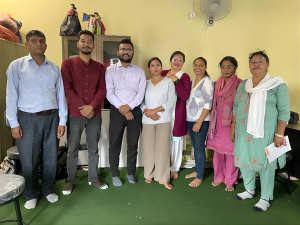
At Javra, giving back to the community is a core part of who we are. As part of our ongoing CSR initiative, Javra Cares, we recently revisited one of the schools we’ve been continuously supporting for several years. This school holds a special place in our journey—not only for the long-standing partnership but also because it exemplifies the transformative power of consistent support and shared commitment. A Journey of Continued Support Over the years, our contributions have included: These efforts aim to create a more conducive and dignified learning environment for the students. A School Run by Women, for the Future One of the most inspiring aspects of this school is its all-female staff. Their dedication and resilience are not only empowering future generations but also challenging societal norms in remarkable ways. Seeing their continued progress reinforces why our involvement matters. Advancing Digital Literacy: The IT Training Session In response to a recent request from the teachers, we organized a dedicated IT training session focused on enhancing their capacity in today’s digital age. The session covered: This initiative aimed to strengthen digital literacy and equip teachers with tools that make learning more interactive and effective. The Impact and What’s Next The response from the teachers was overwhelmingly positive. Their gratitude and eagerness to learn more reaffirmed the importance of such engagements. The session wasn’t just a training—it was a step forward in their professional growth and in the modernization of their teaching methods. We’re incredibly proud of our team for making this possible and grateful to the educators who continue to inspire us with their passion. Javra Cares is more than an initiative—it’s our commitment to building a better future, one meaningful action at a time.

Read More »

Smart Weight Serial Keyboard

Discover the Smart Weight Serial Keyboard, an advanced application by Javra Software designed to revolutionize how you capture and input data on your Android device. Developed natively in Core Java, this robust and efficient app seamlessly transfers data from connected serial devices as keyboard input to any Android application.  Key Features: Seamless Data Capture Effortlessly capture data from serial devices and emulate keyboard input.  Universal Compatibility Works with any Android application that accepts keyboard input.  Robust Performance Developed in Core Java for optimal efficiency and reliability.  Customizable Settings Easily configure serial communication parameters (baud rate, data bits, stop bits, and parity) to match your device.  User-Friendly Interface Simple and intuitive interface ensures quick setup and hassle-free operation.  How It Works: Connect Your Device Establish a connection with your serial device. Configure Parameters Adjust serial communication settings to match your device. Start Capturing Data Automatically convert captured data into keyboard input for any Android app. Versatile Applications: Ideal for various industries, our app simplifies data capture and input, enhancing productivity and performance. Whether you’re in retail, manufacturing, or logistics, Smart Weight Serial Keyboard ensures accurate and efficient data entry from weight scales, barcode scanners, and other serial devices.  Download https://play.google.com/store/apps/details?id=javra.WeightSmart

Read More »